

Profile Photo

CryptoWizardOffline

  • pip02020we
rewrite this title Dexsport Wallet Betting Guide: No Accounts, No Custody, No Delays and Big Bonuses

rewrite this title Dexsport Wallet Betting Guide: No Accounts, No Custody, No Delays and Big Bonuses

The betting industry is shifting away from traditional account-based systems toward wallet-connected, non-custodial experiences. In 2026, players increasingly want instant access, true ownership of funds, and frictionless onboarding. Long sign-up forms, slow withdrawals, and identity checks feel outdated in a world where blockchain networks settle transactions in seconds.

Dexsport is one of the platforms at the center of this transition. With its wallet-first approach, players can place bets instantly—no accounts, no KYC, and no waiting. This guide breaks down how Dexsport’s wallet betting works, why it’s safer and faster than traditional models, and how new users can unlock bonuses without creating a profile.

What Is Wallet Betting?

Wallet betting means you use your crypto wallet—such as MetaMask, Trust Wallet, OKX Wallet, or Phantom—to access the sportsbook directly.
There is no stored balance, no username, and no centralized custody.

It works differently from traditional betting in three major ways:

1. No Accounts

Your wallet is your account. You don’t create passwords or fill out forms.

2. No Custody

Funds stay in your wallet until the moment you place a bet. Dexsport never holds player balances.

3. No Delays

Deposits and withdrawals clear almost instantly thanks to multi-chain connectivity.

To clarify the difference further:

Feature

Wallet Betting

Traditional Betting

Account Needed

❌ No

✅ Yes

Identity Verification

❌ No KYC

✅ Required

Fund Custody

❌ Player-owned

✅ Platform holds funds

Withdrawal Speed

Seconds

Hours or days

Security Model

On-chain

Centralized

Wallet betting is fundamentally a Web3-native model that favors speed, privacy, and user control.

How Dexsport’s No-Account Betting Works

Dexsport gives three ways to access the sportsbook:

Wallet Login

Connect using:

  • MetaMask

  • Trust Wallet

  • Phantom

  • Coinbase Wallet

  • OKX Wallet

  • Any WalletConnect-compatible wallet

No data is shared beyond the public address.

Telegram Login

Instant sign-in with your Telegram ID—extremely fast for mobile users.

Email Login

A lightweight alternative for beginners who aren’t ready to use a Web3 wallet yet.

Regardless of the method, Dexsport does not collect personal details. Your betting history and transactions are stored on-chain where applicable, not on a centralized server.

rewrite this title Dexsport Wallet Betting Guide: No Accounts, No Custody, No Delays and Big Bonuses 

Step-by-Step Guide: How to Bet With Dexsport Wallet

1. Choose Your Preferred Network

Dexsport supports 20+ networks including:

  • Ethereum

  • BNB Chain

  • Tron

  • Polygon

  • Arbitrum

  • Solana

  • Avalanche

Users often select the chain based on fees and speed.

2. Connect Your Wallet

Click “Connect Wallet”
→ Select your wallet provider
→ Confirm connection in one tap.

You are now inside the sportsbook instantly.

3. Select a Sport or Casino Category

Dexsport offers:

  • live sports

  • pre-match markets

  • esports

  • 10,000+ casino games

  • crash games

  • high-volatility slots

Navigation is fast and similar to centralized platforms—only without accounts.

4. Place a Bet

Pick the match, odds, and amount.
Sign the transaction in your wallet.

Because Dexsport is non-custodial, the bet executes immediately.

5. Track Your Bet On-Chain

Every bet is logged on a public blockchain.
This ensures:

  • provable fairness

  • transparent settlements

  • no manipulation

You can verify each result independently.

Why Non-Custodial Betting Is Safer

Custodial platforms hold your money until you withdraw it. That means:

  • frozen accounts

  • long verification cycle

  • limited withdrawal access

  • balance lockups during investigations

A non-custodial model avoids these risks completely.

Dexsport’s wallet-based design provides:

  • complete ownership of your funds

  • no operator custody

  • no risk of losing access to your balance

  • no personal data exposure

If a platform never holds your funds, it also cannot restrict them.

No Delays — Instant Deposits & Withdrawals

One of the defining advantages of wallet betting is transaction speed. Dexsport leverages the fastest available networks—like Tron, Polygon, Solana, and BNB Chain—to ensure rapid transfers.

Why Dexsport transactions are nearly instant:

  • no manual reviews

  • no compliance queues

  • no internal payment approvals

  • no withdrawal screening

Players receive funds in seconds, even during peak activity.

Bonuses for Wallet Users — How to Claim

Dexsport rewards all users equally—wallet bettors included.

Welcome Bonus: 480% + 300 Free Spins

The bonus is split across the first three deposits and requires no profile creation.

Sports Bettors Get Additional Perks

  • free bets tied to deposits

  • boosted odds promotions

  • cashback on losing slips

Weekly Cashback

Active players receive up to 15% weekly cashback in stablecoins.

Bonus Claiming Process

  1. Make a deposit with your wallet

  2. Bonus is applied automatically

  3. No form submission or verification needed

It’s one of the few platforms where bonuses do not require an account.

Tips for Fast and Efficient Wallet Betting

To improve your experience, consider the following:

1. Choose Low-Fee Networks

Tron, Arbitrum, Polygon, and BNB Chain offer the cheapest and fastest transactions.

2. Use Stablecoins for Live Betting

USDT, USDC, and BUSD minimize volatility during fast in-play markets.

3. Keep Multiple Networks Enabled

Network congestion occasionally occurs—switch chains for best speed.

4. Enable One-Click Signing

This reduces confirmation time during rapid live betting.

Pros & Cons of Wallet Betting on Dexsport

Pros

  • No accounts or passwords

  • No KYC or verification delays

  • Instant payouts across 20+ chains

  • Full fund ownership

  • On-chain transparency

  • Easy access to bonuses

  • Smooth mobile experience

Cons

  • Beginners may need time to understand wallet mechanics

  • No traditional customer verification option

  • Requires basic knowledge of blockchain networks

Conclusion

Wallet-based betting is no longer an experimental feature—it has become a defining pillar of modern Web3 crypto betting platforms. Dexsport shows how effortlessly this model can outperform traditional sportsbooks: instant access without accounts, full fund ownership, zero custody risk, and withdrawals that clear in seconds.

Players receive a level of privacy, transparency, and control that centralized platforms simply cannot offer. For crypto-native bettors, Dexsport’s wallet-first design feels intuitive and empowering; for newcomers, it delivers a cleaner, faster, and safer way to bet online.

As Web3 crypto betting platforms continue to evolve, Dexsport stands out as one of the pioneers leading this shift toward a more open, efficient, and user-controlled betting experience.


Read More
rewrite this title Ether’s crash leaves 6 million gaping hole in trading firm’s book

rewrite this title Ether’s crash leaves $686 million gaping hole in trading firm’s book

An ether bull was caught leaning hard into the upside this week as the cryptocurrency tanked, turning the whale bet into a multi-million dollar horror story.

That bull is Trend Research, a trading firm headed by Liquid Capital founder Jack Yi. The firm spent recent months building a bullish (long) bet worth $2 billion on ether by borrowing stablecoins from DeFi giant Aave, which were reportedly collateralized by ether.

The position blew up this week, leaving the firm with a $686 million loss, according to Arkham.

The blow up underscores the crypto market's unchanged reality: Volatility can still make or break traders in a single week. It also shows how traders keep chasing risky leveraged loop plays – borrowing stablecoins against ETH collateral – despite these bets exploding spectacularly every downtrend.

rewrite this title Ether’s crash leaves 6 million gaping hole in trading firm’s book

Trend Research's multi-million dollar loss. (Arkham)

How it went down

The team was convinced of ether's long-term potential and expected a quick rebound from its October drop below $4,000.

But that never materialized – ether kept sliding, endangering their "looped ether" long position. As prices fell, the stablecoin collateral backing the leveraged bet shrank, while the fixed debt loomed large in classic leveraged fashion.

The final blow came this month as ether started falling rapidly with bitcoin and on Feb. 4 prices tanked to $1,750, the weakest level since April 2025. Trend Research responded by liquidating over 300,000 ether, according to data source Bubble Maps.

"Trend Research started sending large amounts of ETH to Binance to repay debt on AAVE In total, this cluster moved 332k ETH worth $700M to Binance over 5 days," Bubble Maps said on X. The firm now holds just 1.463 ETH.

Jack Yi described these sales as a risk-control measure.

"As multi-heads in this round, we remain optimistic about the performance of the new bull market: ETH reaching over $10,000, BTC exceeding $200,000 USD. We're just making some adjustments to control risk, with no change in our expectations for the future mega bull market," Yi said in a post on X.

He added that now is the best time to buy tokens, calling volatility as the biggest feature of the crypto circle. "Historically, countless bulls have been shaken off by this volatility, but often what follows is a doubled rebound," he noted.

Read More
rewrite this title U.S. sanctions crypto exchanges tied to Iran for first time after brutal protest crackown

rewrite this title U.S. sanctions crypto exchanges tied to Iran for first time after brutal protest crackown

rewrite this title U.S. sanctions crypto exchanges tied to Iran for first time after brutal protest crackown

The U.S. Treasury Department has, for the first time, sanctioned cryptocurrency exchanges for operating in Iran’s financial sector.

The Office of Foreign Assets Control (OFAC) announced sanctions against Zedcex and Zedxion both registered in the United Kingdom, as part of a broader crackdown on Iranian authorities after their brutal suppression of an internal uprising that killed thousands of their own citizens.

According to the Treasury's statement, the exchanges facilitated transactions for the Islamic Revolutionary Guard Corps (IRGC), which the U.S. and its allies in the European Union designate as a terrorist organization. Since their registration in 2022, just one of these processed over $94 billion in transactions, the Treasury said.

The two platforms are also linked to Babak Morteza Zanjani, an Iranian businessman once convicted of embezzling billions from Iran’s national oil company. OFAC alleges Zanjani used the exchanges to help move funds for the regime, including proceeds supporting IRGC-linked entities.

The Central Bank of Iran (CBI) was found earlier this month to have bought over $500 million of Tether’s USDT stablecoin, with the primary purpose of manipulating foreign exchange markets as the rial’s value plunged.

This designation marks a shift. While OFAC has previously sanctioned individual crypto wallet addresses and technology providers tied to sanctions evasion or cybercrime, yet this is the first time it has blacklisted entire exchange entities under Iran-specific financial sanctions authorities.

As a result of the designation, all U.S.-linked assets of the exchanges are now frozen, and American individuals and entities are barred from engaging with them.

Read More
rewrite this title 3 Reasons Why Cardano Price Might Keep Falling

rewrite this title 3 Reasons Why Cardano Price Might Keep Falling

The Cardano price has bounced again, but the outcome looks familiar. Since January 20, ADA climbed roughly 7%, briefly pushing higher before stalling and settling near $0.35. This was not a breakout. It was another bounce that failed to build follow-through.

Three factors explain why Cardano’s price bounces keep failing, and why the same setup remains in place.

Reason 1: A Weak Hidden Bullish Divergence Sparked the Bounce

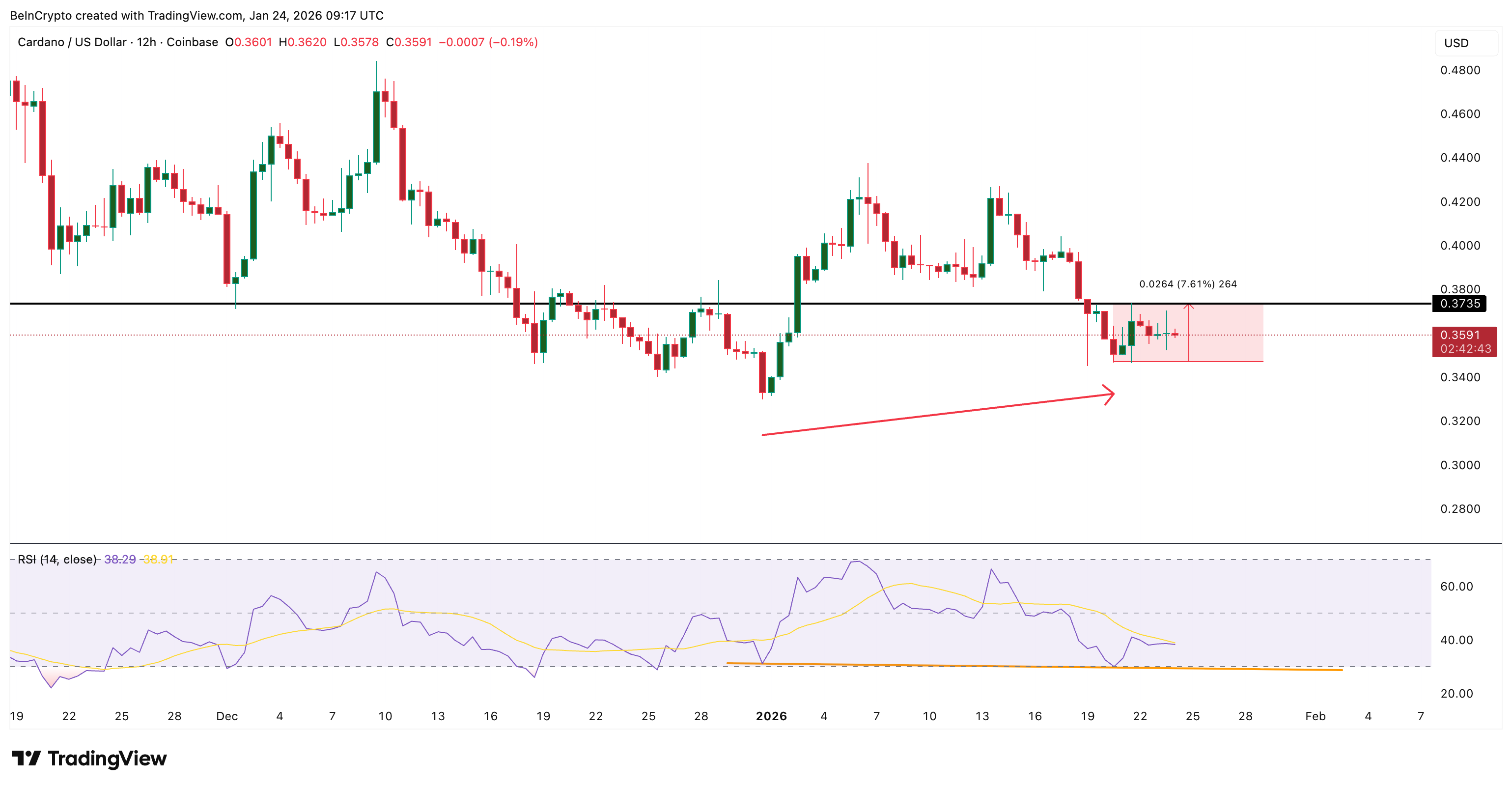
The latest bounce was triggered by a hidden bullish divergence on the 12-hour chart. Between late December and January 20, the ADA price made a higher low while the RSI printed a very shallow lower low.

SponsoredSponsored

That detail matters. A shallow RSI lower low suggests selling pressure eased slightly, not that buyers took control. This type of divergence usually leads to short-lived rebounds, not sustained rallies.

rewrite this title 3 Reasons Why Cardano Price Might Keep Falling
Weak Divergence: TradingView

Want more token insights like this? Sign up for Editor Harsh Notariya’s Daily Crypto Newsletter here

That is exactly what happened. Cardano’s price bounced about 7% to $0.37 on January 21, but the move stalled quickly.

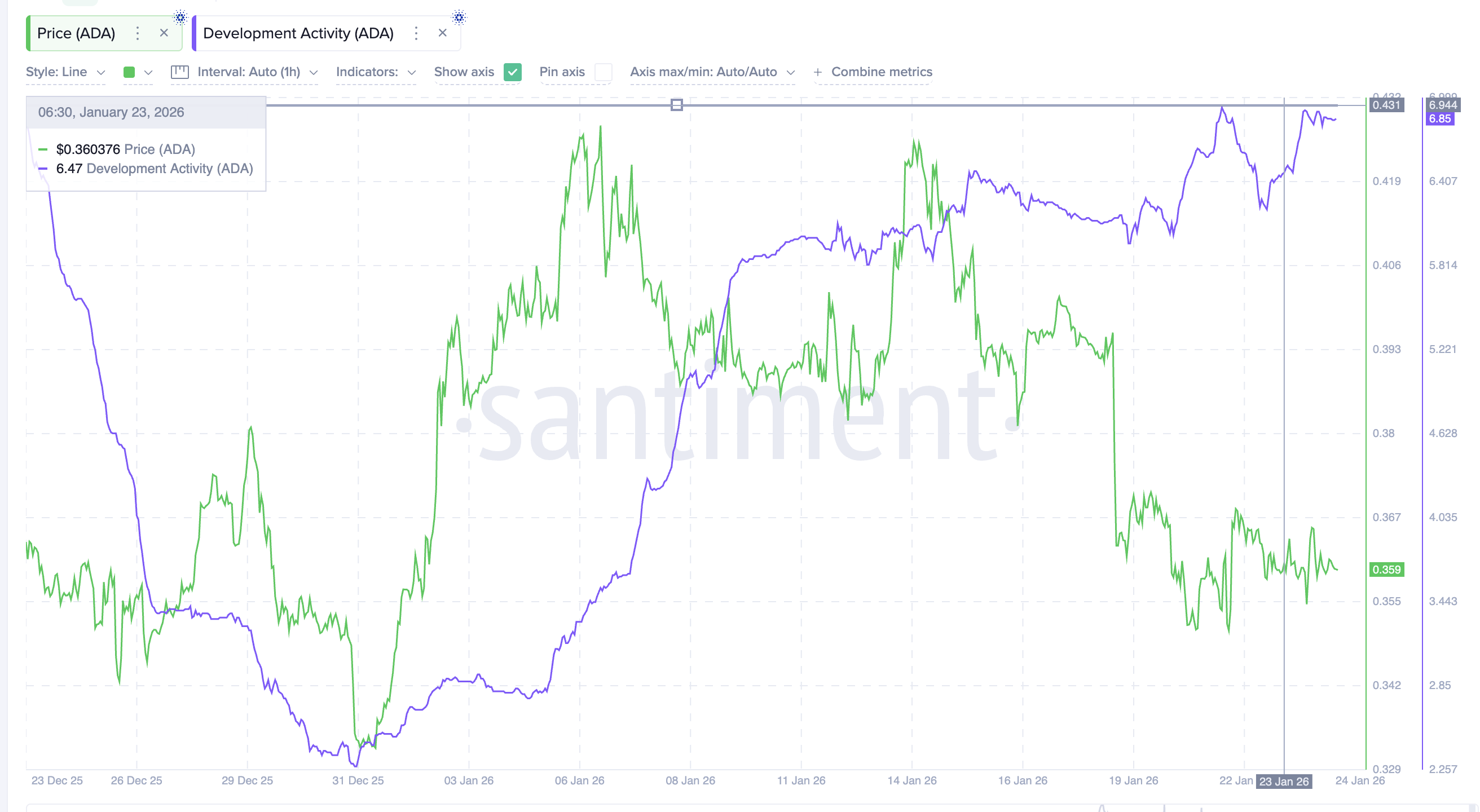
The timing explains why. On January 21, when the price approached $0.37, Cardano’s development activity score peaked near 6.94, its highest level in about a month.

Development activity reflects how much work is happening on the chain and often supports price confidence. In mid-January, the local ADA price peak closely followed a local peak in development activity.

Development Activity Peaks And Then Drops
Development Activity Peaks And Then Drops: Santiment

That development-led support did not hold. Development activity slipped, taking the price down with it. It has now risen to around 6.85, but the month-high level hasn’t been broken. The divergence stopped the selloff, but it did not create enough demand to push higher as development stalled.

SponsoredSponsored

Reason 2: Profit Booking Spikes Every Time the Cardano Price Rises

The bigger problem is what happens after Cardano starts moving up.

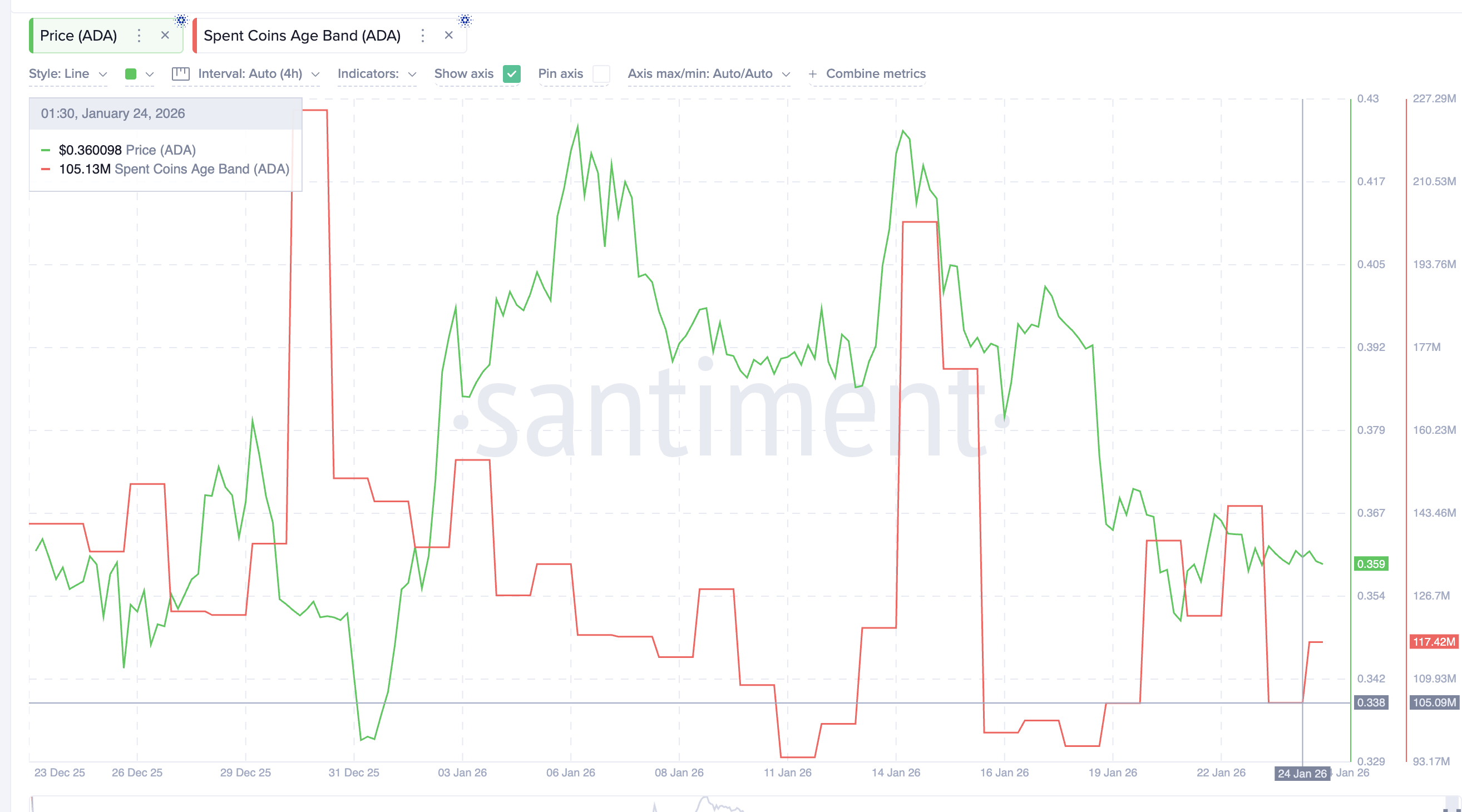
The spent coins age band tracks how many coins of all age groups are being moved. Rising values usually signal selling and profit booking. Over the past month, each price bounce has been followed by a sharp rise in spent coins activity.

In late December, Cardano’s price climbed by roughly 12%, while spent coins activity jumped by more than 80%, showing aggressive selling into strength. In mid-January, ADA rose about 10%, and spent coins activity surged by nearly 100%, again confirming that holders used the rally to exit positions.

Coin Activity Peaks
Coin Activity Peaks: Santiment

The same behavior is returning now. Since January 24, spent coins activity has already increased by more than 11% from 105 million to 117 million, even though the ADA price has not broken higher yet. That suggests sellers are positioning ahead of another bounce rather than waiting for confirmation.

This is why momentum keeps fading. Each rally attempt is met with faster profit-taking than the last.

SponsoredSponsored

Reason 3: Whales Are Reducing Exposure, Not Absorbing the Selling

Normally, whales help absorb this type of selling pressure. Right now, they are not.

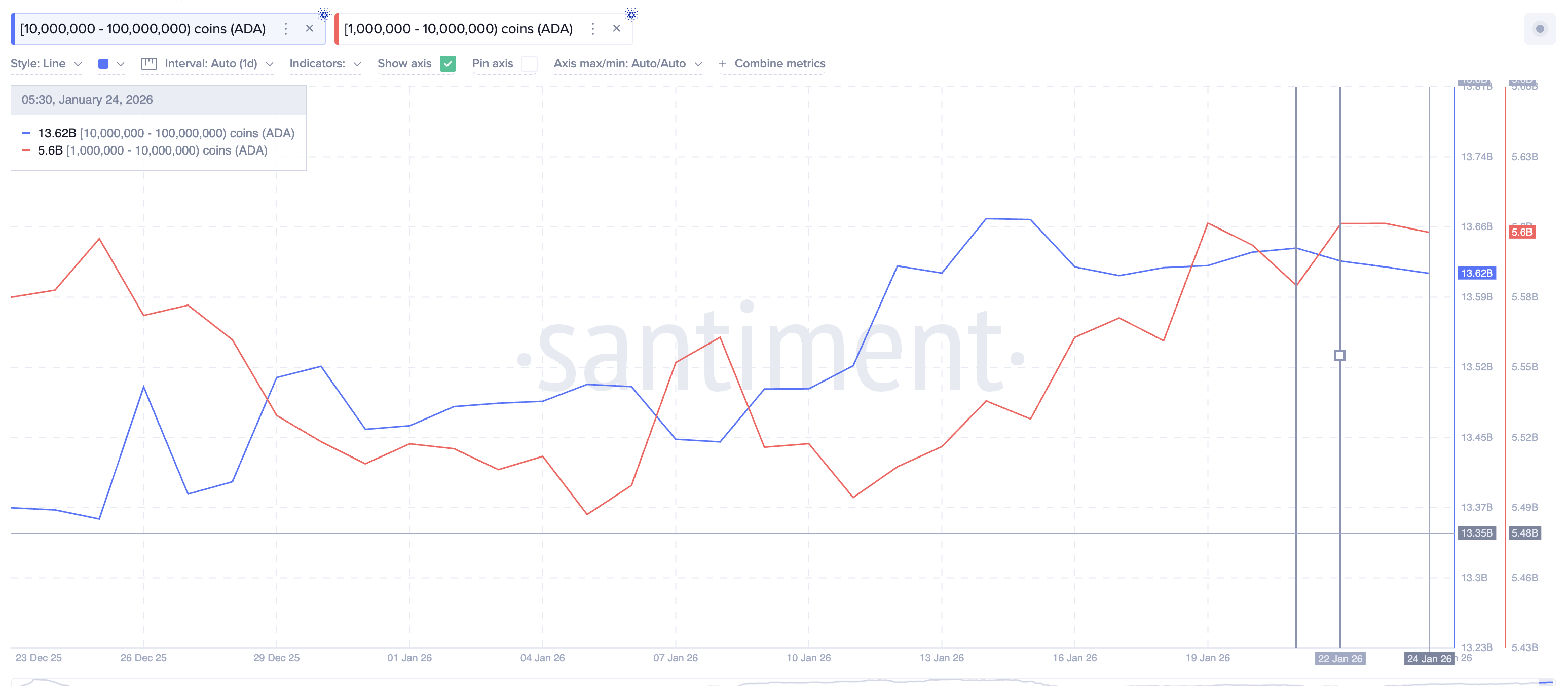
Wallets holding between 10 million and 100 million ADA have reduced their balance from roughly 13.64 billion ADA to about 13.62 billion ADA, a drop of around 20 million ADA since January 21. Starting January 22, wallets holding between 1 million and 10 million ADA have slipped from about 5.61 billion ADA to roughly 5.60 billion ADA, shedding close to 10 million ADA.

Whales Drop ADA Stash
Whales Drop ADA Stash: Santiment

These are not panic exits, but they are clear net reductions. That lack of whale demand means profit-taking is no longer being absorbed, leaving the price more exposed to downside pressure once it arrives.

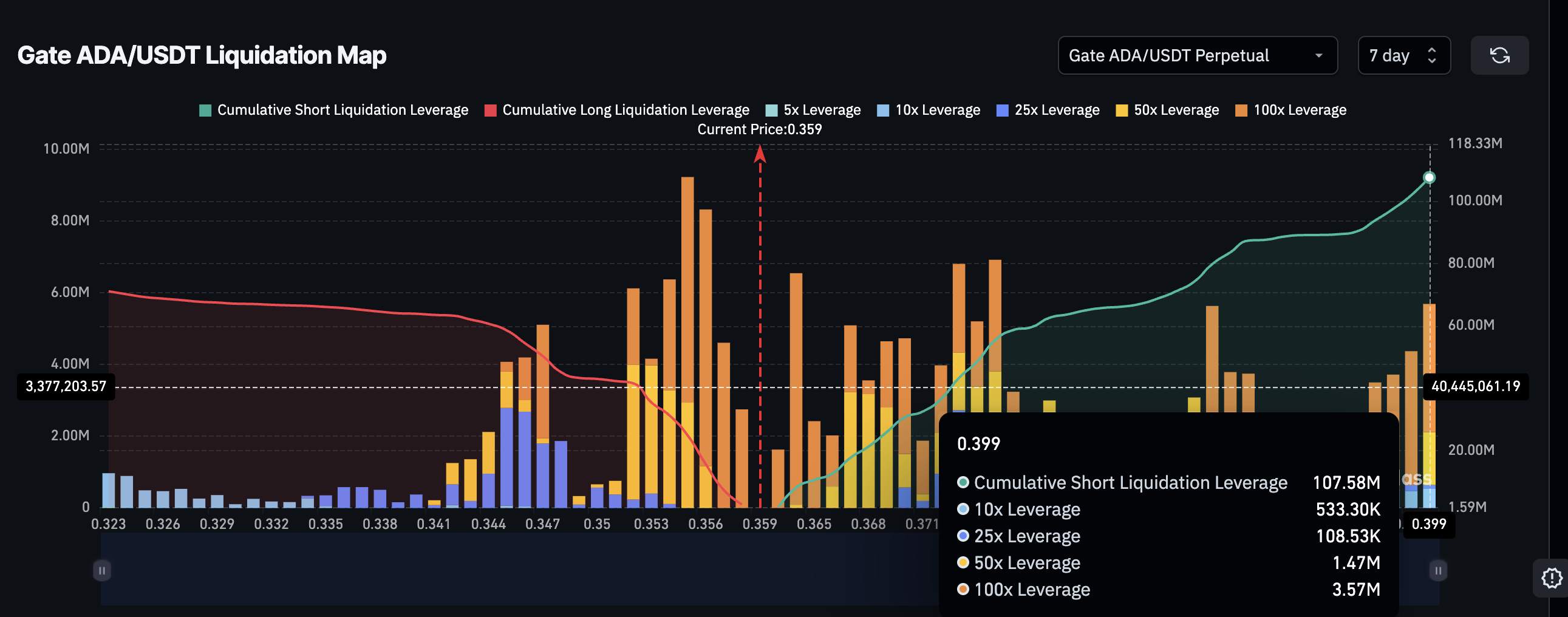
Derivatives data reinforces this weakness. Over the next seven days, short liquidations stand near $107.6 million, while long liquidations sit closer to $70.1 million. Shorts outweigh longs by more than 50%, showing that traders are expecting rallies to fail rather than extend.

Liquidation Map
Liquidation Map: Coinglass
SponsoredSponsored

This imbalance suggests the market expects selling pressure to return quickly if Cardano attempts another bounce, especially near resistance.

Cardano Price Levels That Decide What Happens Next

The price structure now makes things clearer.

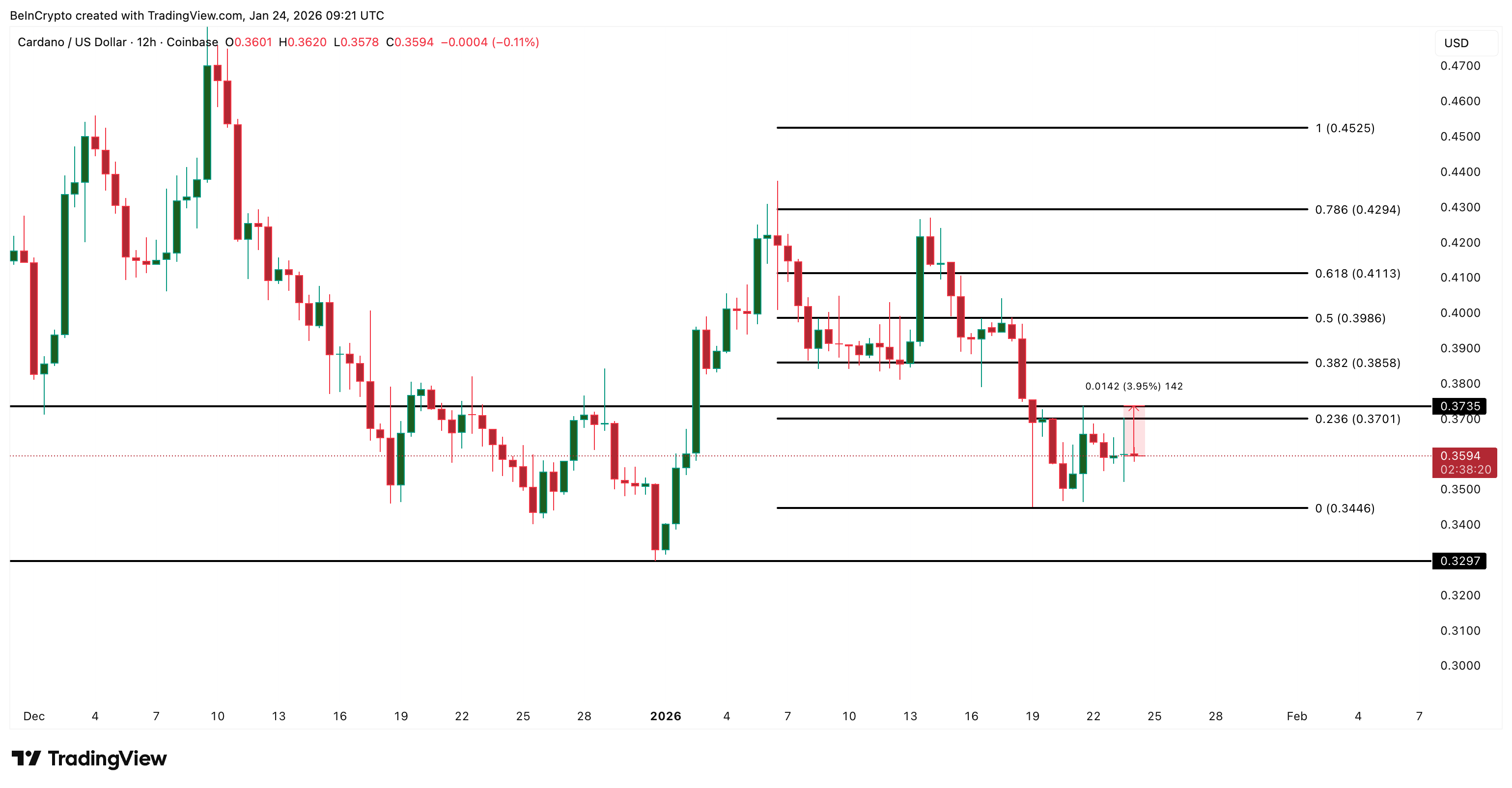
On the upside, $0.37 remains the first critical level. A clean break and hold above it would trigger short liquidations and offer temporary relief. However, $0.39 is far more important. A move above this zone would liquidate most remaining shorts and mark the first meaningful shift in momentum. Beyond that, $0.42 is the level where the broader structure could be bullish again.

On the downside, $0.34 is the key support. A loss of this level would liquidate a large portion of remaining long positions and could accelerate downside pressure quickly as leverage unwinds.

Cardano Price Analysis
Cardano Price Analysis: TradingView

For Cardano to escape this cycle, three things must align. Development activity needs to reclaim and hold above recent highs. Spent coins activity must slow instead of rising into bounces. And whales need to return as net buyers.

Until then, Cardano’s price bounces remain vulnerable.

Read More
rewrite this title 3 Altcoins Crypto Whales Are Buying After US CPI Inflation Report

rewrite this title 3 Altcoins Crypto Whales Are Buying After US CPI Inflation Report

Crypto whales are ramping up the accumulation of several altcoins after the US September CPI data, released on October 24. It came in cooler than expected at 3.0% versus a 3.1% forecast. The softer inflation print has lifted rate-cut expectations and renewed confidence in risk assets.

As markets price in a potential dovish shift from the Fed, whales are quietly rotating into three altcoins they expect to lead the next rally. Or at least a rebound.

Pepe (PEPE)

As markets lean toward a dovish Fed stance, whales appear to be rotating capital into select altcoins that could gain from easier liquidity — and Pepe (PEPE) is one of them. The token is up over 6%, week-on-week.

SponsoredSponsored

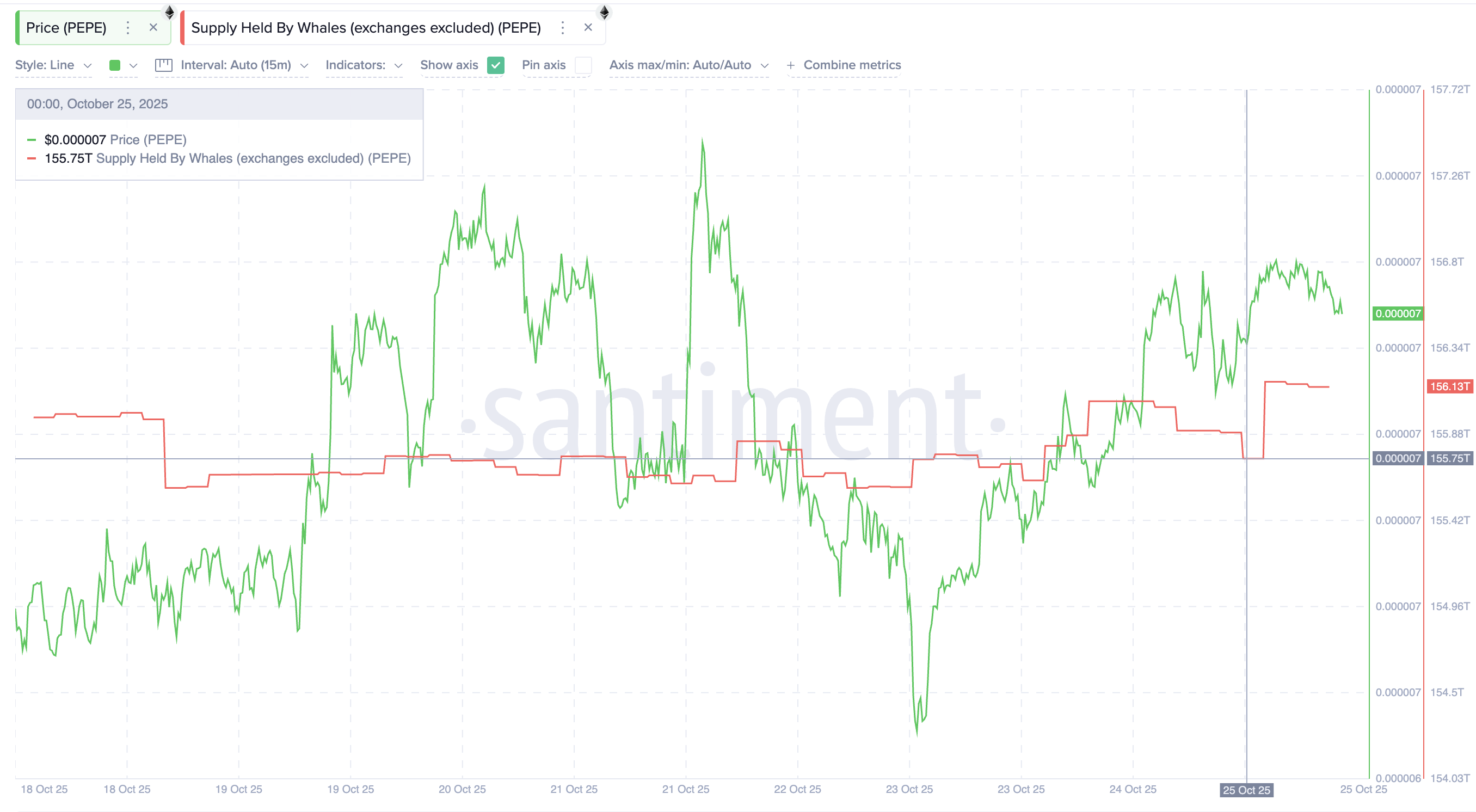
Over the past 24 hours, Pepe whales increased their holdings from 155.75 trillion to 156.13 trillion tokens. This means adding about 0.38 trillion PEPE, worth roughly $2.7 million at the current PEPE price.

This quiet accumulation suggests that crypto whales are positioning early. More so as the probability of an October rate cut climbs above 98%, fueling expectations of broader market relief.

rewrite this title 3 Altcoins Crypto Whales Are Buying After US CPI Inflation Report
PEPE Whales: Santiment

Want more token insights like this? Sign up for Editor Harsh Notariya’s Daily Crypto Newsletter here.

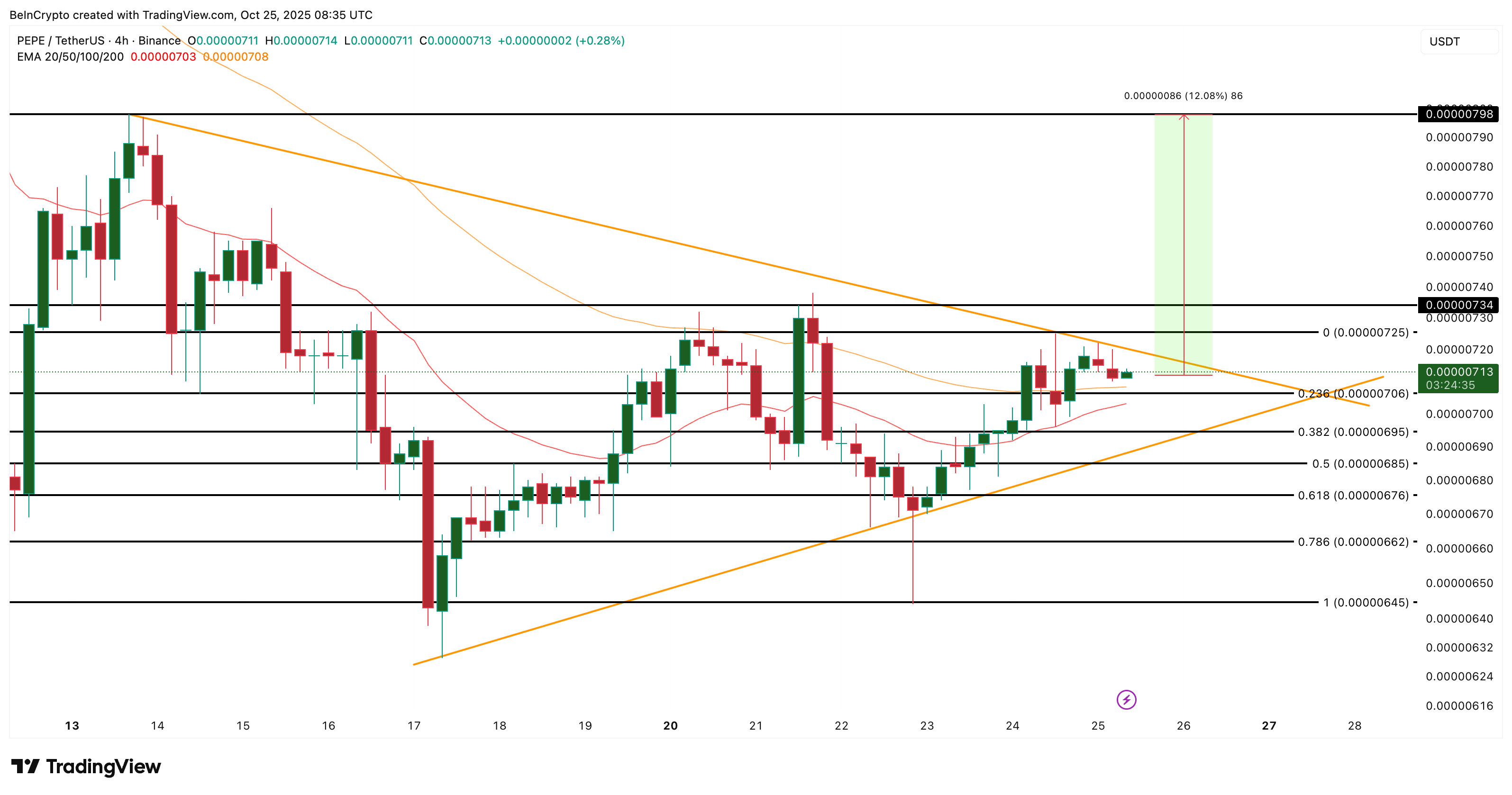
On the 4-hour chart, the PEPE price has been consolidating inside a symmetrical triangle since October 13. It is a structure known to precede sharp breakouts.

A clean move above $0.0000072 could trigger a 12% rally toward $0.0000079. And that would put Pepe among the altcoins crypto whales are buying with technical conviction.

Another signal supporting this view is a possible golden crossover between the 20-period EMA (red line) and the 50-period EMA (orange line). The EMA, or exponential moving average, tracks recent price direction by giving more weight to recent candles.

When the short-term EMA crosses above the longer one, it shows momentum shifting toward buyers. It is something altcoin whales often look for when confirming trend reversals.

PEPE Price Analysis
PEPE Price Analysis: TradingView
SponsoredSponsored

Still, PEPE remains a volatile trade. A drop below $0.0000069 could expose $0.0000064. But as long as whales are adding and price stays within the tightening pattern, Pepe remains one of the coins whales are buying into strength rather than fear.

PancakeSwap (CAKE)

After PEPE, another token catching the attention of crypto whales is PancakeSwap (CAKE). It is a DeFi asset often favored during improving market sentiment.

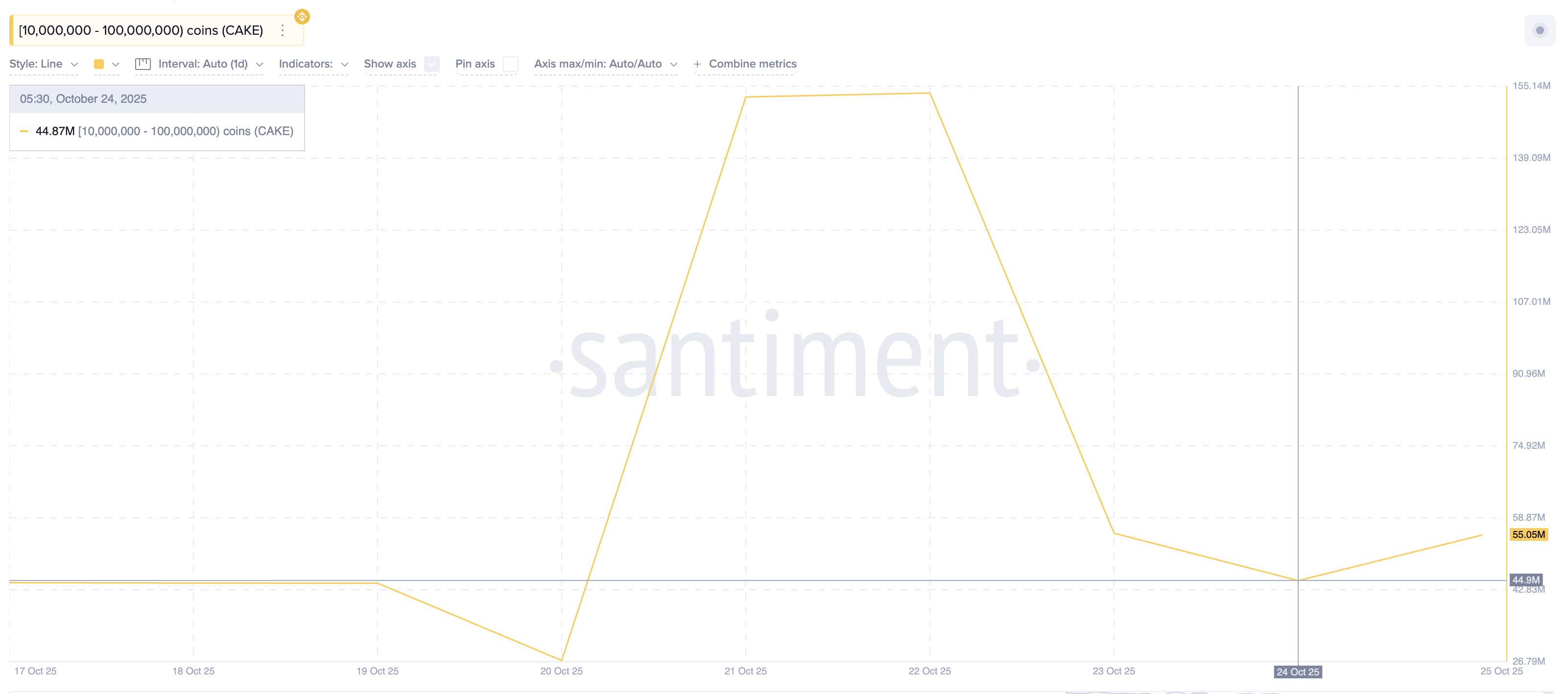
Whales appear to have shifted positions shortly after the CPI-driven rebound in risk appetite, raising their holdings from 44.87 million CAKE on October 24 to 55.05 million, a net gain of over 10.18 million CAKE.

At the current price of $2.69, that adds up to roughly $27.3 million in new accumulation, suggesting growing conviction that the market’s softer tone may fuel further upside.

CAKE Whales
CAKE Whales: Santiment

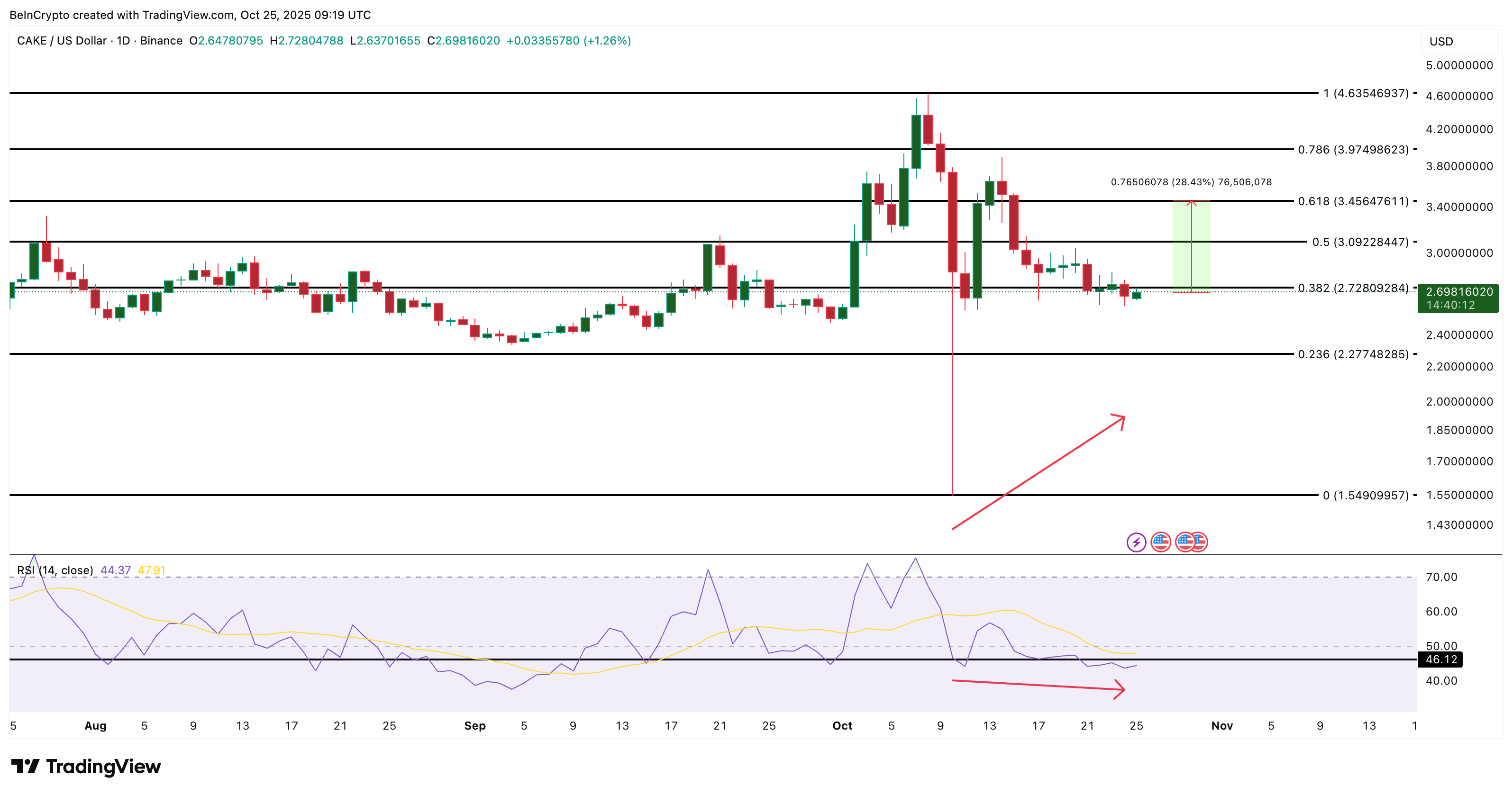
On the technical side, CAKE’s structure reinforces this optimism. Between October 10 and 24, the token formed a higher low even as the Relative Strength Index (RSI) — which measures buying versus selling strength — made a lower low. This hidden bullish divergence often signals trend continuation, meaning the broader uptrend CAKE has maintained over the past year (up more than 50%) could still be intact.

SponsoredSponsored

Currently trading near $2.69, CAKE faces stiff resistance at $2.72, a level that has capped every rally attempt since October 22. If buyers can close a candle above that threshold, momentum could extend toward $3.45, the next major resistance zone on the daily chart.

CAKE Price Analysis
CAKE Price Analysis: TradingView

The RSI trend backs this view, with readings curling upward as buying strength rebuilds.

However, if the token fails to stay above $2.27, the bullish setup weakens. Whale impatience or broader altcoin market pressure could then send CAKE sliding toward $1.54. That is a strong support area, last tested during the Black Friday crash.

For now, though, the combination of rising whale holdings, steady on-chain conviction, and technical stability keeps PancakeSwap on the shortlist of altcoins crypto whales are buying during this post-CPI cooling period.

World Liberty Financial (WLFI)

The final name on whales’ radar appears to be World Liberty Financial (WLFI) — a politically charged token often tied to Trump-linked market themes.

SponsoredSponsored

Whales have sharply increased exposure to WLFI, raising their holdings by 18.78% in the past 24 hours to a total of 12.13 million WLFI. At the current price of $0.13, that’s roughly $1.57 million worth of tokens added to wallets in a single day.

WLFI Whales
WLFI Whales: Nansen

The buying spree follows not only the cooler US CPI print but also the anticipation of a potential Trump–Xi Jinping meeting expected this week. That could further speculation around political and narrative-based altcoins. The timing of this accumulation suggests whales may be positioning for a sentiment rebound tied to these macro catalysts.

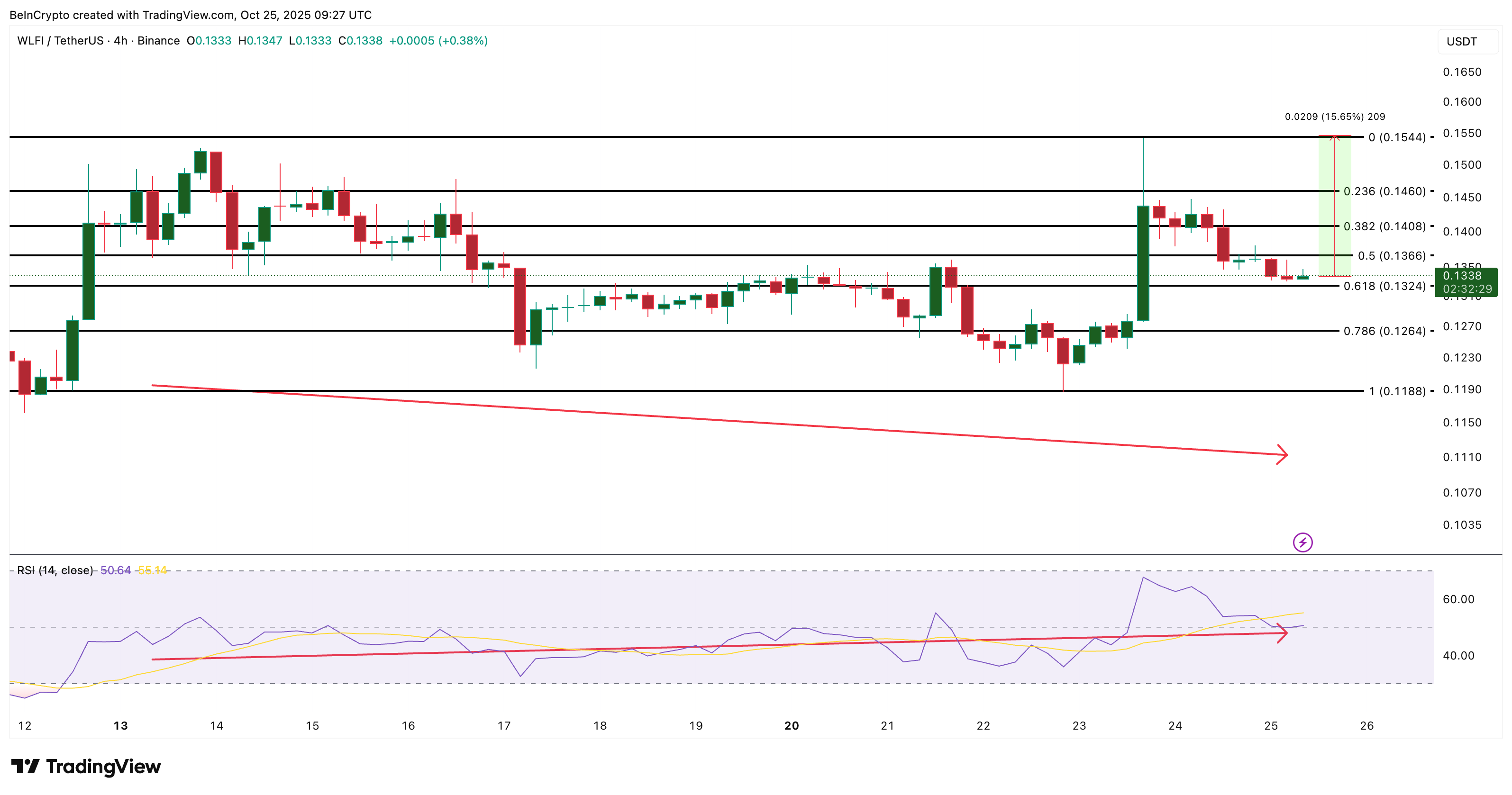
On the 4-hour chart, WLFI even shows early technical signs of recovery. Between October 13 and 25, the price formed a lower low. The Relative Strength Index (RSI) — which measures the balance between buying and selling momentum — made a higher low. This bullish divergence signals that sellers may be losing strength, and buyers are starting to step in.

Currently trading near $0.133, the WLFI price faces its first resistance at $0.14. A clean break above that could confirm momentum strength and send prices toward $0.15, implying a 15% near-term rally.

However, WLFI remains volatile. If the price fails to hold the $0.13 support, a drop toward $0.11 remains likely.

WLFI Price Analysis
WLFI Price Analysis: TradingView

For now, the combination of fresh whale buying, political event speculation, and an improving RSI trend makes WLFI one of the more intriguing altcoins crypto whales are buying after the CPI print — and potentially the most narrative-driven bet of the three.

Read More
Please wait...
Top