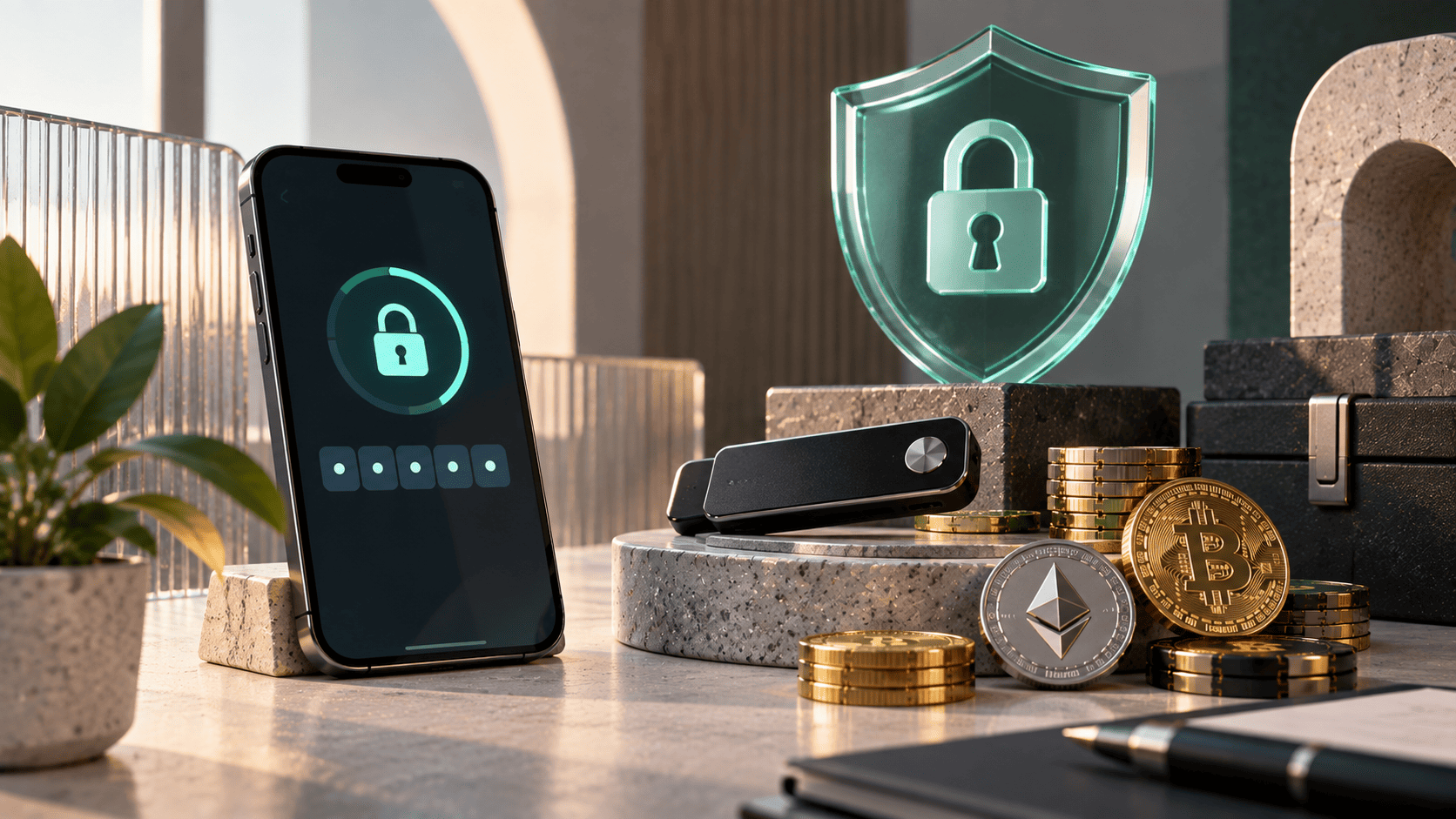



Welcome to Crypto News and Reviews, where clarity meets crypto. In this powerful Part 1 of our Security & Privacy Masterclass, ...

Write a 1000-word comprehensive and engaging article from the script that includes Crypto Market Trends 2023. Please structure the article with appropriate subheadings in ` ` tags to enhance readability and SEO optimization. Ensure the article provides valuable insights and information to the readers. Include a set of Frequently Asked Questions (FAQs) at the end, […]

rewrite this title Dexsport Wallet Betting Guide: No Accounts, No Custody, No Delays and Big Bonuses
The betting industry is shifting away from traditional account-based systems toward wallet-connected, non-custodial experiences. In 2026, players increasingly want instant access, true ownership of funds, and frictionless onboarding. Long sign-up forms, slow withdrawals, and identity checks feel outdated in a world where blockchain networks settle transactions in seconds.
Dexsport is one of the platforms at the center of this transition. With its wallet-first approach, players can place bets instantly—no accounts, no KYC, and no waiting. This guide breaks down how Dexsport’s wallet betting works, why it’s safer and faster than traditional models, and how new users can unlock bonuses without creating a profile.
What Is Wallet Betting?
Wallet betting means you use your crypto wallet—such as MetaMask, Trust Wallet, OKX Wallet, or Phantom—to access the sportsbook directly.
There is no stored balance, no username, and no centralized custody.
It works differently from traditional betting in three major ways:
1. No Accounts
Your wallet is your account. You don’t create passwords or fill out forms.
2. No Custody
Funds stay in your wallet until the moment you place a bet. Dexsport never holds player balances.
3. No Delays
Deposits and withdrawals clear almost instantly thanks to multi-chain connectivity.
To clarify the difference further:
|
Feature |
Wallet Betting |
Traditional Betting |
|
Account Needed |
❌ No |
✅ Yes |
|
Identity Verification |
❌ No KYC |
✅ Required |
|
Fund Custody |
❌ Player-owned |
✅ Platform holds funds |
|
Withdrawal Speed |
Seconds |
Hours or days |
|
Security Model |
On-chain |
Centralized |
Wallet betting is fundamentally a Web3-native model that favors speed, privacy, and user control.
How Dexsport’s No-Account Betting Works
Dexsport gives three ways to access the sportsbook:
Wallet Login
Connect using:
-
MetaMask
-
Trust Wallet
-
Phantom
-
Coinbase Wallet
-
OKX Wallet
-
Any WalletConnect-compatible wallet
No data is shared beyond the public address.
Telegram Login
Instant sign-in with your Telegram ID—extremely fast for mobile users.
Email Login
A lightweight alternative for beginners who aren’t ready to use a Web3 wallet yet.
Regardless of the method, Dexsport does not collect personal details. Your betting history and transactions are stored on-chain where applicable, not on a centralized server.
Step-by-Step Guide: How to Bet With Dexsport Wallet
1. Choose Your Preferred Network
Dexsport supports 20+ networks including:
-
Ethereum
-
BNB Chain
-
Tron
-
Polygon
-
Arbitrum
-
Solana
-
Avalanche
Users often select the chain based on fees and speed.
2. Connect Your Wallet
Click “Connect Wallet”
→ Select your wallet provider
→ Confirm connection in one tap.
You are now inside the sportsbook instantly.
3. Select a Sport or Casino Category
Dexsport offers:
-
live sports
-
pre-match markets
-
esports
-
10,000+ casino games
-
crash games
-
high-volatility slots
Navigation is fast and similar to centralized platforms—only without accounts.
4. Place a Bet
Pick the match, odds, and amount.
Sign the transaction in your wallet.
Because Dexsport is non-custodial, the bet executes immediately.
5. Track Your Bet On-Chain
Every bet is logged on a public blockchain.
This ensures:
-
provable fairness
-
transparent settlements
-
no manipulation
You can verify each result independently.
Why Non-Custodial Betting Is Safer
Custodial platforms hold your money until you withdraw it. That means:
-
frozen accounts
-
long verification cycle
-
limited withdrawal access
-
balance lockups during investigations
A non-custodial model avoids these risks completely.
Dexsport’s wallet-based design provides:
-
complete ownership of your funds
-
no operator custody
-
no risk of losing access to your balance
-
no personal data exposure
If a platform never holds your funds, it also cannot restrict them.
No Delays — Instant Deposits & Withdrawals
One of the defining advantages of wallet betting is transaction speed. Dexsport leverages the fastest available networks—like Tron, Polygon, Solana, and BNB Chain—to ensure rapid transfers.
Why Dexsport transactions are nearly instant:
-
no manual reviews
-
no compliance queues
-
no internal payment approvals
-
no withdrawal screening
Players receive funds in seconds, even during peak activity.
Bonuses for Wallet Users — How to Claim
Dexsport rewards all users equally—wallet bettors included.
Welcome Bonus: 480% + 300 Free Spins
The bonus is split across the first three deposits and requires no profile creation.
Sports Bettors Get Additional Perks
-
free bets tied to deposits
-
boosted odds promotions
-
cashback on losing slips
Weekly Cashback
Active players receive up to 15% weekly cashback in stablecoins.
Bonus Claiming Process
-
Make a deposit with your wallet
-
Bonus is applied automatically
-
No form submission or verification needed
It’s one of the few platforms where bonuses do not require an account.
Tips for Fast and Efficient Wallet Betting
To improve your experience, consider the following:
1. Choose Low-Fee Networks
Tron, Arbitrum, Polygon, and BNB Chain offer the cheapest and fastest transactions.
2. Use Stablecoins for Live Betting
USDT, USDC, and BUSD minimize volatility during fast in-play markets.
3. Keep Multiple Networks Enabled
Network congestion occasionally occurs—switch chains for best speed.
4. Enable One-Click Signing
This reduces confirmation time during rapid live betting.
Pros & Cons of Wallet Betting on Dexsport
Pros
-
No accounts or passwords
-
No KYC or verification delays
-
Instant payouts across 20+ chains
-
Full fund ownership
-
On-chain transparency
-
Easy access to bonuses
-
Smooth mobile experience
Cons
-
Beginners may need time to understand wallet mechanics
-
No traditional customer verification option
-
Requires basic knowledge of blockchain networks
Conclusion
Wallet-based betting is no longer an experimental feature—it has become a defining pillar of modern Web3 crypto betting platforms. Dexsport shows how effortlessly this model can outperform traditional sportsbooks: instant access without accounts, full fund ownership, zero custody risk, and withdrawals that clear in seconds.
Players receive a level of privacy, transparency, and control that centralized platforms simply cannot offer. For crypto-native bettors, Dexsport’s wallet-first design feels intuitive and empowering; for newcomers, it delivers a cleaner, faster, and safer way to bet online.
As Web3 crypto betting platforms continue to evolve, Dexsport stands out as one of the pioneers leading this shift toward a more open, efficient, and user-controlled betting experience.

An ether bull was caught leaning hard into the upside this week as the cryptocurrency tanked, turning the whale bet into a multi-million dollar horror story.
That bull is Trend Research, a trading firm headed by Liquid Capital founder Jack Yi. The firm spent recent months building a bullish (long) bet worth $2 billion on ether by borrowing stablecoins from DeFi giant Aave, which were reportedly collateralized by ether.
The position blew up this week, leaving the firm with a $686 million loss, according to Arkham.
The blow up underscores the crypto market's unchanged reality: Volatility can still make or break traders in a single week. It also shows how traders keep chasing risky leveraged loop plays – borrowing stablecoins against ETH collateral – despite these bets exploding spectacularly every downtrend.

How it went down
The team was convinced of ether's long-term potential and expected a quick rebound from its October drop below $4,000.
But that never materialized – ether kept sliding, endangering their "looped ether" long position. As prices fell, the stablecoin collateral backing the leveraged bet shrank, while the fixed debt loomed large in classic leveraged fashion.
The final blow came this month as ether started falling rapidly with bitcoin and on Feb. 4 prices tanked to $1,750, the weakest level since April 2025. Trend Research responded by liquidating over 300,000 ether, according to data source Bubble Maps.
"Trend Research started sending large amounts of ETH to Binance to repay debt on AAVE In total, this cluster moved 332k ETH worth $700M to Binance over 5 days," Bubble Maps said on X. The firm now holds just 1.463 ETH.
Jack Yi described these sales as a risk-control measure.
"As multi-heads in this round, we remain optimistic about the performance of the new bull market: ETH reaching over $10,000, BTC exceeding $200,000 USD. We're just making some adjustments to control risk, with no change in our expectations for the future mega bull market," Yi said in a post on X.
He added that now is the best time to buy tokens, calling volatility as the biggest feature of the crypto circle. "Historically, countless bulls have been shaken off by this volatility, but often what follows is a doubled rebound," he noted.


The U.S. Treasury Department has, for the first time, sanctioned cryptocurrency exchanges for operating in Iran’s financial sector.
The Office of Foreign Assets Control (OFAC) announced sanctions against Zedcex and Zedxion both registered in the United Kingdom, as part of a broader crackdown on Iranian authorities after their brutal suppression of an internal uprising that killed thousands of their own citizens.
According to the Treasury's statement, the exchanges facilitated transactions for the Islamic Revolutionary Guard Corps (IRGC), which the U.S. and its allies in the European Union designate as a terrorist organization. Since their registration in 2022, just one of these processed over $94 billion in transactions, the Treasury said.
The two platforms are also linked to Babak Morteza Zanjani, an Iranian businessman once convicted of embezzling billions from Iran’s national oil company. OFAC alleges Zanjani used the exchanges to help move funds for the regime, including proceeds supporting IRGC-linked entities.
The Central Bank of Iran (CBI) was found earlier this month to have bought over $500 million of Tether’s USDT stablecoin, with the primary purpose of manipulating foreign exchange markets as the rial’s value plunged.
This designation marks a shift. While OFAC has previously sanctioned individual crypto wallet addresses and technology providers tied to sanctions evasion or cybercrime, yet this is the first time it has blacklisted entire exchange entities under Iran-specific financial sanctions authorities.
As a result of the designation, all U.S.-linked assets of the exchanges are now frozen, and American individuals and entities are barred from engaging with them.